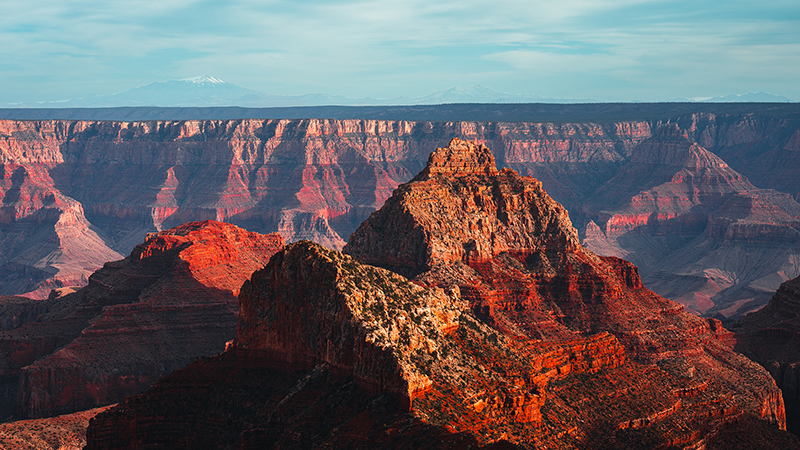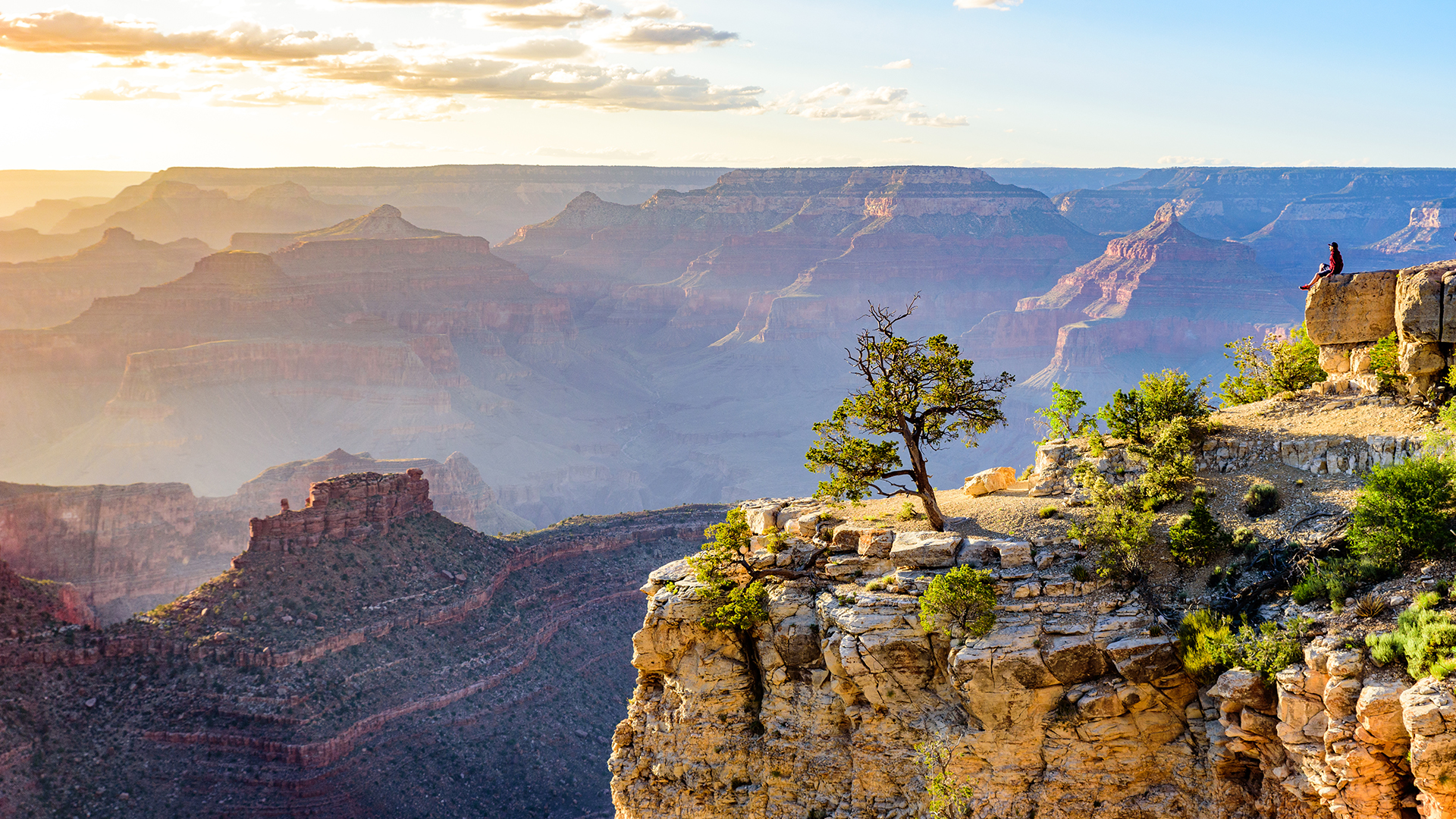
The Grand Canyon — North America’s only Natural Wonder of the World — can be found in Northern Arizona. At roughly 300 miles long and 10 miles wide, this mile-deep canyon offers visitors a breathtaking experience — regardless of how they choose to explore it.
With countless things to do and see around the canyon, it can be challenging to know where to start — but we’ve got you covered.
The Grand Canyon features two explorable rims — the more popular and populated South Rim, home to the canyon’s main headquarters, and the quieter, more remote North Rim. Although both rims offer equally astonishing views and activities galore, each rim has its own unique flavor.
Here’s a look at both rims and the adventures waiting for you along each.
The South Rim: The Classic Canyon Experience
Home to the Grand Canyon’s main visitor center, the South Rim welcomes more visitors than the North Rim and offers more amenities and attractions in terms of lodging, dining, tours, transportation and family-friendly experiences. Open year-round, the South Rim tends to be much busier — particularly during peak season — so expect more traffic getting there and more visitors on the trails.
To explore the South Rim, start in gateway towns, such as Williams and Tusayan, which provide easy access, lodging and several attractions nearby. When heading into the canyon, stop by the Grand Canyon Visitor Center, Verkamp’s Visitor Center and Kolb Studio to learn more about the park’s history and geology. After getting the lay of the land, explore scenic routes like Hermit Road or stretch your legs along the Rim Trail and Trail of Time.
Catch panoramic views from Yavapai Point and Desert View Watchtower, browse exhibits at Yavapai Museum of Geology or cruise the Greenway Trail on an e-bike. Visitors can also join ranger-led programs and Grand Canyon Conservancy experiences, take Jeep and Hummer tours or plan a summer trip around the park’s beloved annual Star Party each June.
The North Rim: A Wilder, Quieter Side of the Canyon
Quieter, more remote and offering fewer visitor services, the North Rim is a rugged portion of the Grand Canyon that draws fewer visitors and offers a more isolated outdoor experience. Due to its higher elevation, the North Rim — open from mid-May through mid-October — is also cooler and experiences heavy snowfall in winter, resulting in a shorter season.
The remote North Rim is ideal for those who prefer cooler temperatures, quiet forest scenery and outdoor adventure. Gateway town Fredonia provides access to this less-traveled side of the park, where visitors can camp (though some campgrounds do require permits), hike and experience a more rugged — albeit more peaceful — atmosphere. Although the historic North Rim Lodge was sadly lost to the Dragon Bravo Fire in 2025, nearby stays like Jacob Lake Inn and Kaibab Lodge welcome visitors, and multiple campgrounds and backcountry camping options are available for visitors who prefer to sleep under the stars. If you’re in need of provisions while trekking around the North Rim, the North Rim General Store is the place to stop. (Note: It’s the only place to buy bottled water within the North Rim area of the park.)
The North Rim’s scenic drives and overlooks offer some of the canyon’s most breathtaking views. Cruise Cape Royal Road and Point Imperial Road to reach viewpoints like Cape Royal, Angel’s Window, Point Imperial, Walhalla Overlook and Vista Encantada, a favorite picnic spot with sweeping canyon views. Visitors may also spot bison grazing at Big Meadow and Little Park.
Hiking trails range from easy paved walks along the Cape Royal Trail to more immersive ones like Cape Final Trail, Ken Patrick Trail and portions of the Arizona National Scenic Trail, where forested paths open dramatically onto canyon vistas.
Explore the Canyon — Solely by Foot
Any view of the canyon is inarguably inspiring — but when seen up close on a rim-to-rim hike, it’s near spiritual. Learn how to hike the Grand Canyon rim-to-rim the “right way.”


Arizona Office of Tourism
These articles are brought to you by the staff of the Arizona Office of Tourism, and occasionally local tourism organizations around the state.