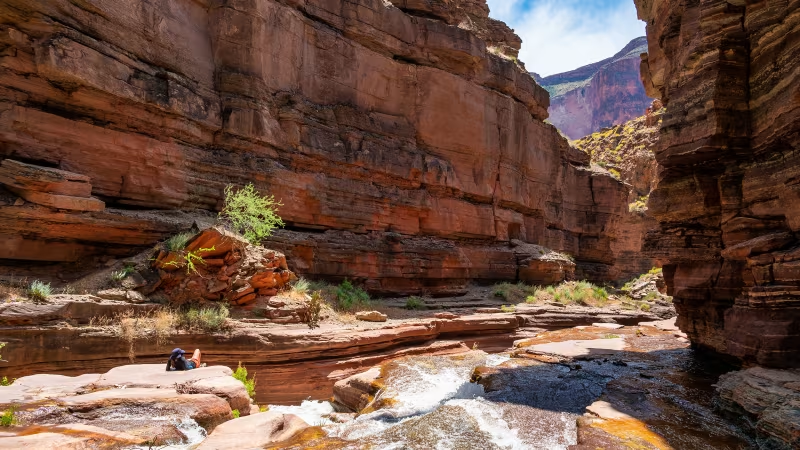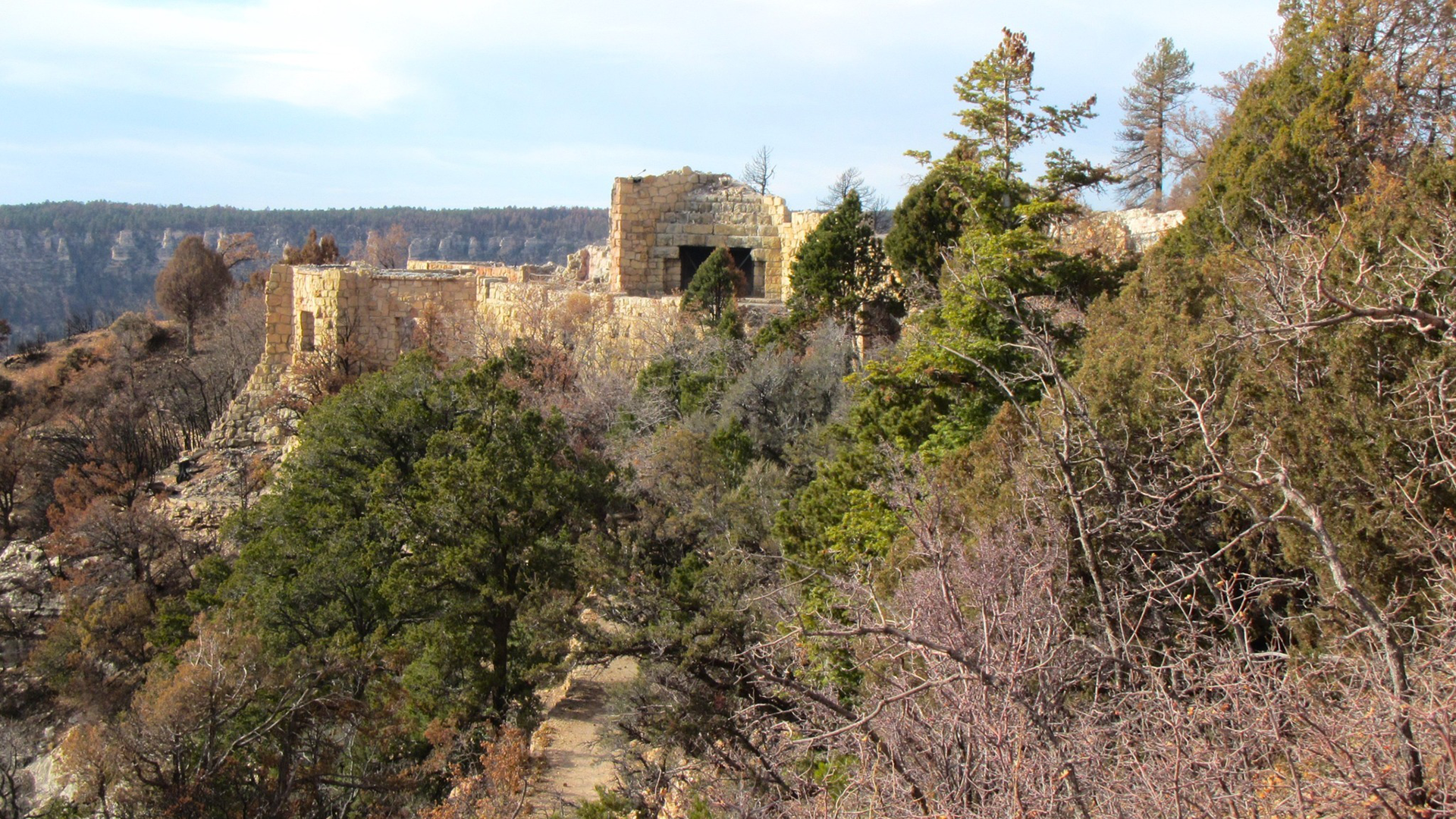
On July 4, 2025, lightning struck on the Grand Canyon’s North Rim, igniting tinder-dry vegetation. Fanned by high winds, the Dragon Bravo fire, as it was called, consumed 149,399 acres before it was fully contained at the end of September.
Of the nearly 150,000 acres, 71,129 were within the Grand Canyon National Park. In addition to the loss of vegetation and wildlife habitats — not to mention damage to the park’s infrastructure and trails — 114 buildings and outbuildings burned, including some 80 cabins and the park’s iconic Grand Canyon Lodge.
Shock and heartbreak reverberated through the park and Arizona, and globally, as visitors worldwide fondly remembered experiencing the dazzling views, the scent of pines and the charm of the rustic buildings at the park’s quieter and more remote North Rim.
But just as seedlings emerge from a burned landscape, the North Rim is slowly recovering — plans are underway to open that portion of the park for the 2026 season beginning May 15, and dozens of stakeholders are hashing out visions of what the rebuilt portion of the park will look like.
History of the Grand Canyon Lodge

As measured by the flight of the California condor, it’s only a distance of about 10 miles from the park’s popular South Rim (which receives 90 percent of the visitors) to its more remote North Rim.
Getting to the North Rim requires a 4.5-hour drive around the Canyon or a challenging, cross-canyon, rim-to-rim hike of 21 miles. Nonetheless, the North Rim has attracted hardy explorers for more than acentury, beginning in the early 20th century, when tent camps and food services were first offered.
In 1928, architect Gilbert Stanley Underwood designed the North Rim’s first lodge, with Spanish Colonial details. Ironically, the original lodge burned down in 1932 after the kitchen caught fire. Underwood, who also designed the Ahwahnee Hotel in Yosemite and other national park inns, was brought back to recreate anew lodge for the North Rim, this time with a steeply sloped roof to accommodate the snow load.

Constructed of native Kaibab limestone and timber, the “new” lodge opened in 1937, featuring an awe-inspiring sunroom that offered vistas of the canyon through a series of tall windows. For generations, the sunroom and its outdoor patios drew travelers to sit a spell and meditate on the wonders of the Grand Canyon.
Near the lobby, visitors also stopped to rub the nose of Brighty, the bronze statue of North Rim’s famous burro, immortalized in Marguerite Henry’s classic children’s book, “Brighty of the Grand Canyon.” In 1987, the building was added to the National Register of Historic Places.
After the Fire
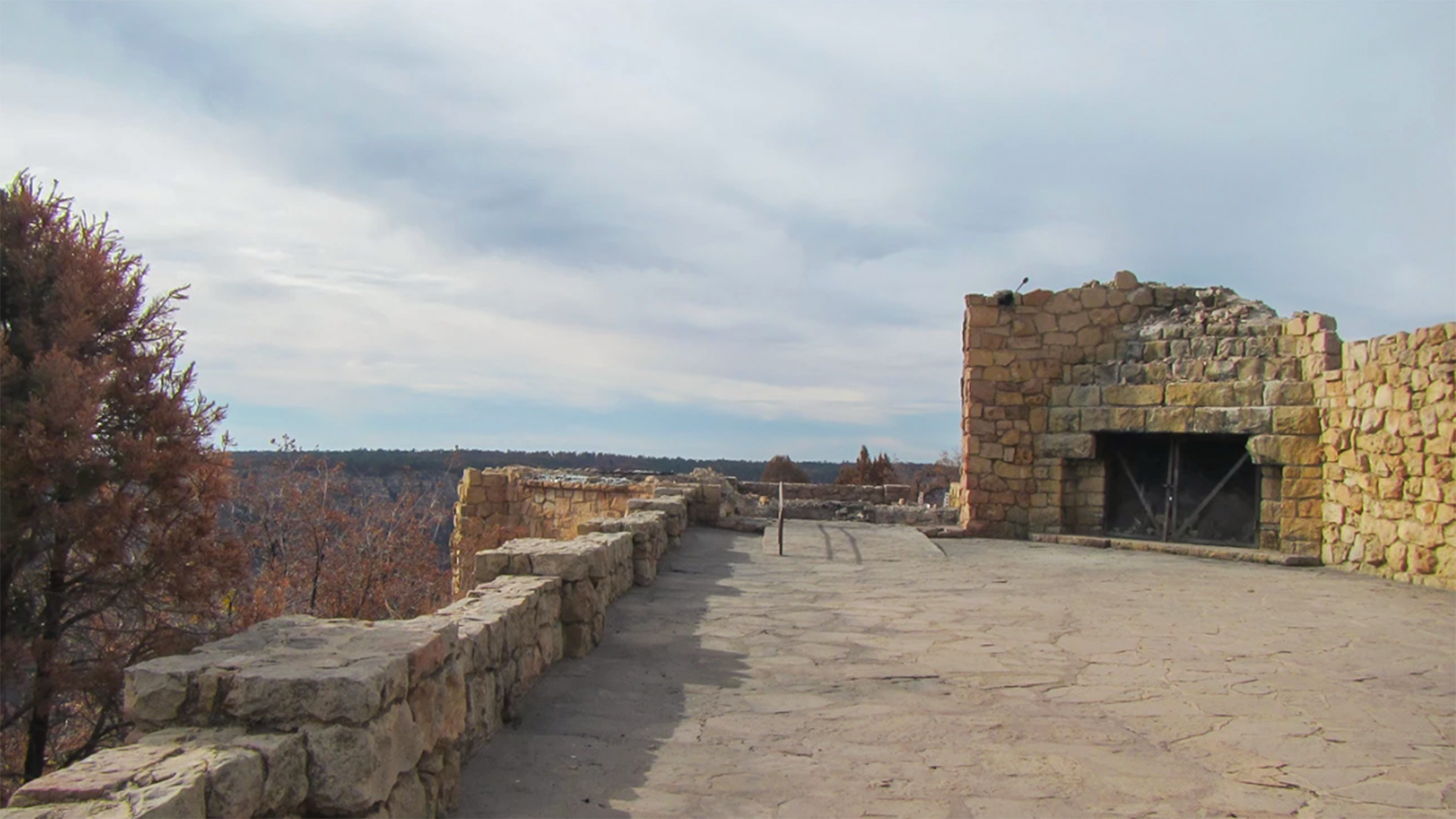
The Dragon Bravo fire only left some of the lodge’s stone walls standing and a good portion of the charming cabins in cinders, but the North Rim is scheduled to re-open for its regular season of mid-May through mid-October 2026.
What can visitors expect? According to park sources, paved roadways, including Highway 67 and scenic byways should be open, providing views. Parking spots will be limited; carpooling is recommended.
Some trails will be available, while others, such as the upper portion of the North Kaibab Trail, will open when they are stabilized and cleared of post-fire hazards. Campgrounds will likely be open, but with no RV hookups or other conveniences due to a lack of utilities. Portable toilets for campers and day visitors are being considered, as is providing food service. For now, visitors should look to nearby out-of-park spots such as Kaibab Lodge and Jacob Lake Inn for food and accommodations.
Future of the Grand Canyon Lodge
For now, there is no dollar estimate of the fire’s damage to the park’s North Rim nor the cost to rebuild. Grand Canyon officials, though, say the rebuilding will be thoughtful and methodical, with a two-year anticipated process to develop a long-term plan for the North Rim. There will be multiple opportunities for public input, as well as from myriad stakeholders, including the park’s 11 associated tribes, Kaibab National Forest, Coconino County, the Grand Canyon Conservancy, Grand Canyon Trust, Arizona’s State Historic Preservation Office, Arizona Department of Transportation, the Arizona Trail Association, nearby businesses and the North Rim’s concessionaire, Aramark.
Whatever is salvageable from the original lodge and cabins is hoped to be used in the new structures. For sentimentalists, that also includes the Brighty statue. Though damaged, the wily bronze burro survived.
Fire is part of a forest’s natural cycle and contributes to forest health, but the Dragon Bravo fire has forever changed the North Rim. The Grand Canyon, though, remains.
Header image credit: The remaining walls of the Grand Canyon Lodge post demolition, Nov. 2025. National Park Service.


Nora Burba Trulsson
Nora Burba Trulsson is a long-time Arizona resident and a freelance writer specializing in travel, food, lifestyle, architecture and design topics. Her articles have appeared in Phoenix Home & Garden, Arizona Highways, Sunset, houzz.com, Valley Guide, Modern Luxury Scottsdale and other publications and websites.