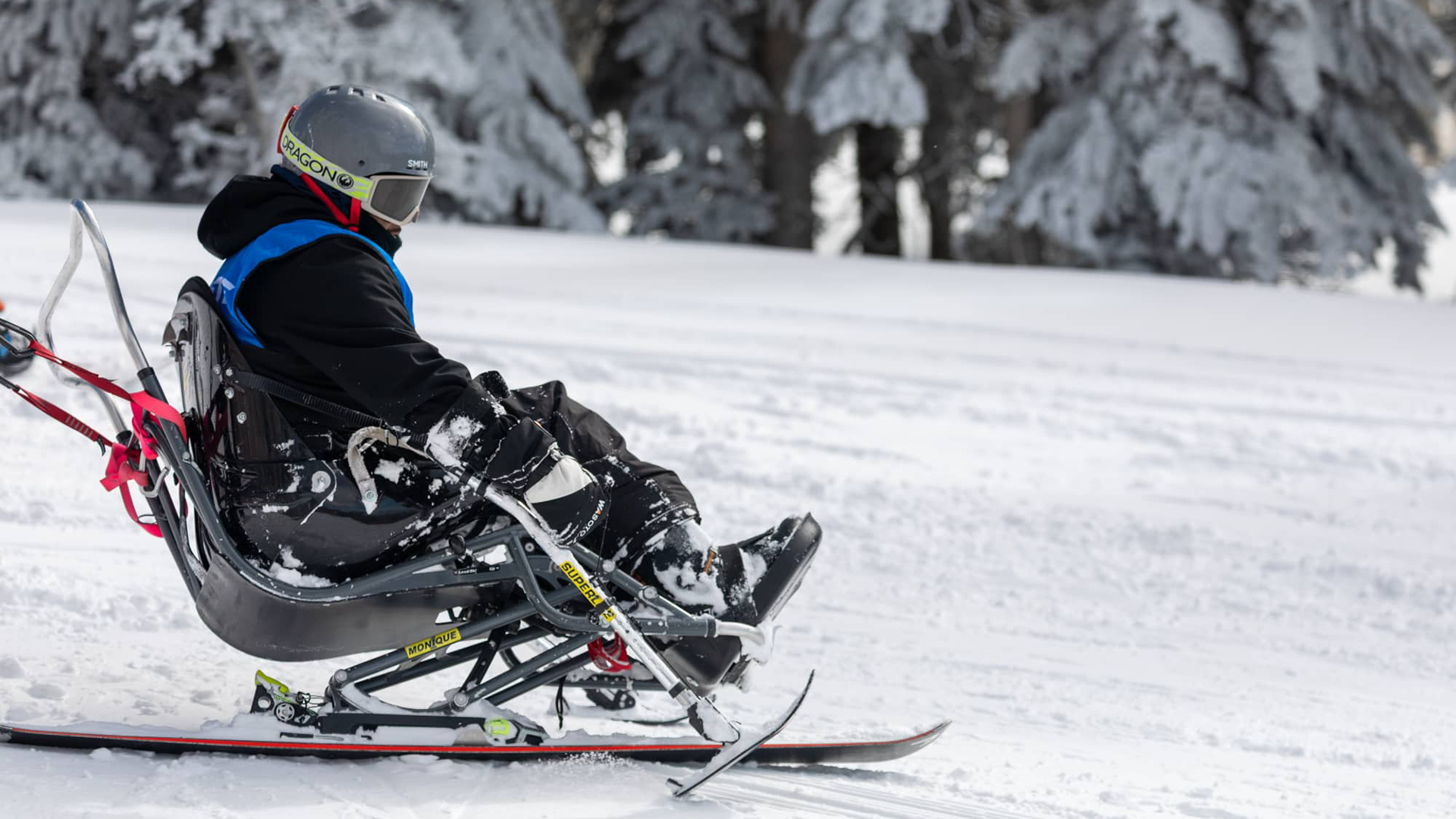
Nestled among the Ponderosa pines at the base of the San Francisco Peaks, and within a 90-minute drive of the Grand Canyon, Flagstaff has long been revered as Northern Arizona’s gateway to the outdoors. And for travelers with accessibility needs, Flagstaff delivers. Adventurers find myriad ways to get out and explore, whether on a kayak, on a paved trail or soaring up the mountainside in a glass-walled gondola.
Things to Do: Accessible Outdoors Activities
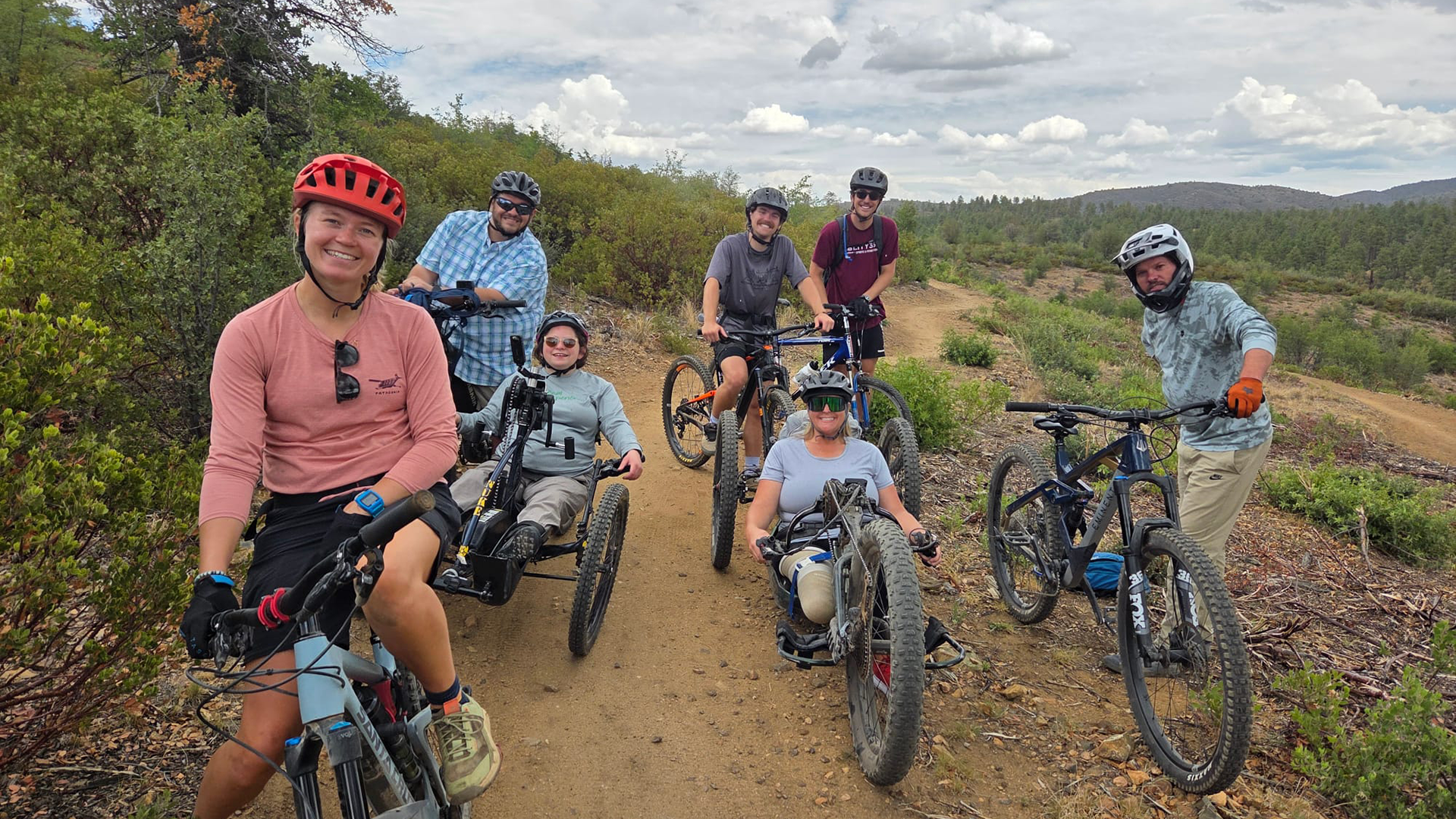
In the Flagstaff area, there are several organizations that aim to remove barriers, both physical and cognitive, to accessing outdoors recreation.
One of these, High Country Adaptive Sports, provides year-round adaptive programming for people with physical, cognitive and sensory disabilities, as well as for individuals living with permanent injuries. The year-round programming of guided excursions andovernight events runs the gamut from kayaking and rock climbing to skiing, snowboarding and adaptive mountain biking.
Another company, Arizona Adaptive Water Sports, provides safe water sport experiences for children ages three and older and adults with physical and cognitive challenges at statewide locations, including Kaibab Lake, about 35 miles west of Flagstaff. The group even welcomes loved ones to participate in events, or to observe, at no additional cost. Their adaptive-sports offerings: kayaking, water skiing, wakeboarding and fishing.
Adaptive Snow Skiing
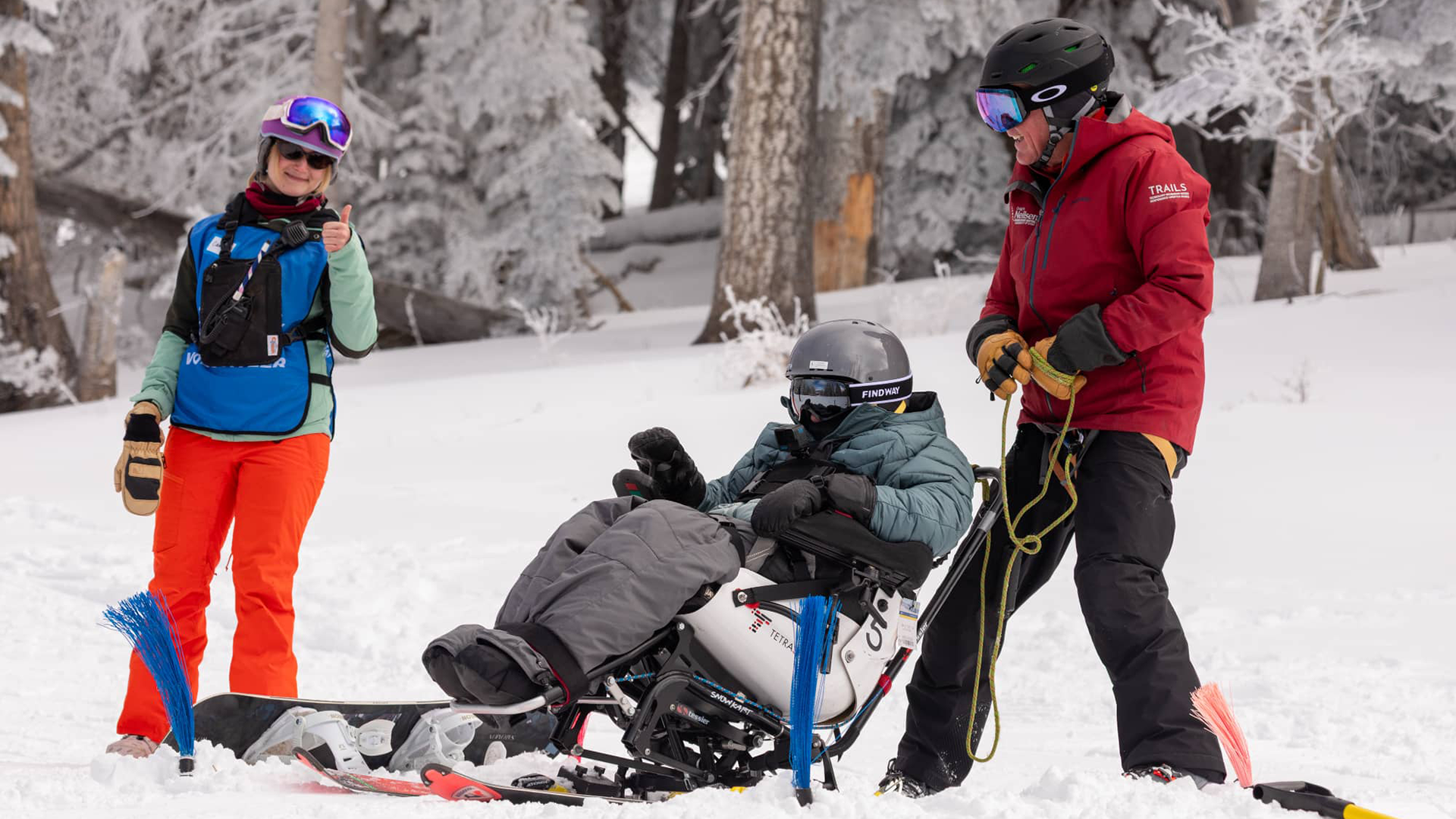
The San Francisco Peaks rise high above Flagstaff, an impressive natural landmark that towers at nearly 13,000 feet. It’s these peaks that make Flagstaff a hub for cold-weather sports, such as skiing, sledding and snowboarding. And it all happens at Arizona Snowbowl, one of the oldest continually operated ski areas in the country.
Here, barrier-free activities include a ride on Arizona Snowbowl’s gondola. The gondola operates year-round, and during its 15-minute ascent up the mountain, it yields astonishing views of Northern Arizona — from the red rocks of Sedona to the Grand Canyon.
Additionally, High Country Adaptive Sports partners with Arizona Snowbowl to provide adaptive snowsport lessons every ski season, according to Truman Shoaff, programs director of High Country Adaptive Sports.
“We have a fleet of adaptive equipment,” Shoaff says. “We’ve got a ski that is controlled by a joystick, for someone who has control of their hands, and [one thatoperates using] their breath through a straw.”
Accessible Water Sports
When it comes to adaptive water sports in and around Flagstaff, there are several go-to local spots, such as Ashurst Lake, Marshall Lake and Lake Mary. The latter is a favorite among kayakers, canoers and anglers; its easy access and calm waters make it the perfect place for supported water sports. High Country Adaptive Sports hosts adaptive paddling events, both private lessons and group outings, at Lake Mary.
Trails and Parks
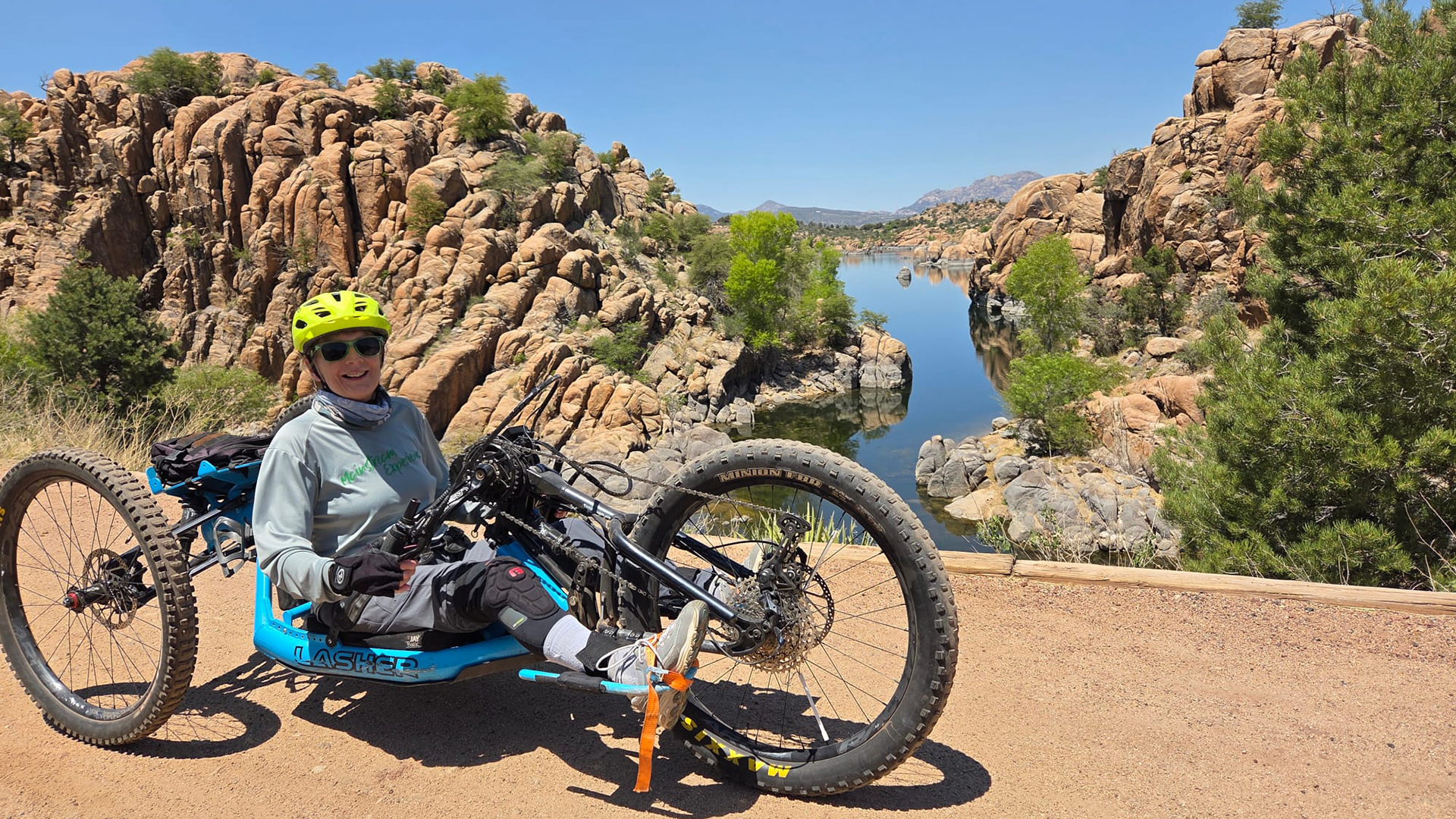
The Flagstaff Urban Trail System, a 59-mile network of multi-use paths around Flagstaff, is ideal for wheelchair users, adaptive cyclists and anyone who prefers smooth, paved trails. The network connects parks and green spaces throughout the city, winding through neighborhoods and offering scenic routes for casual outings.
“The Flagstaff Urban Trails System makes it possible for residents and visitors to easily access the great outdoors from anywhere in town,” says Ryan Randazzo, media relations and marketing project manager with Discover Flagstaff.
There’s also Buffalo Park, which spans 215 acres of native grassland and features flat, accessible walking paths for visitors using adaptive equipment. Five accessible workout stations along the route provide exercise opportunities complete with mountain views.
Just outside Flagstaff, Sunset Crater Volcano National Monument offers wheelchair-friendly viewpoints and short accessible trails, allowing for a scenic day trip for visitors who want to experience Northern Arizona’s volcanic natural history.
Grand Canyon Accessibility
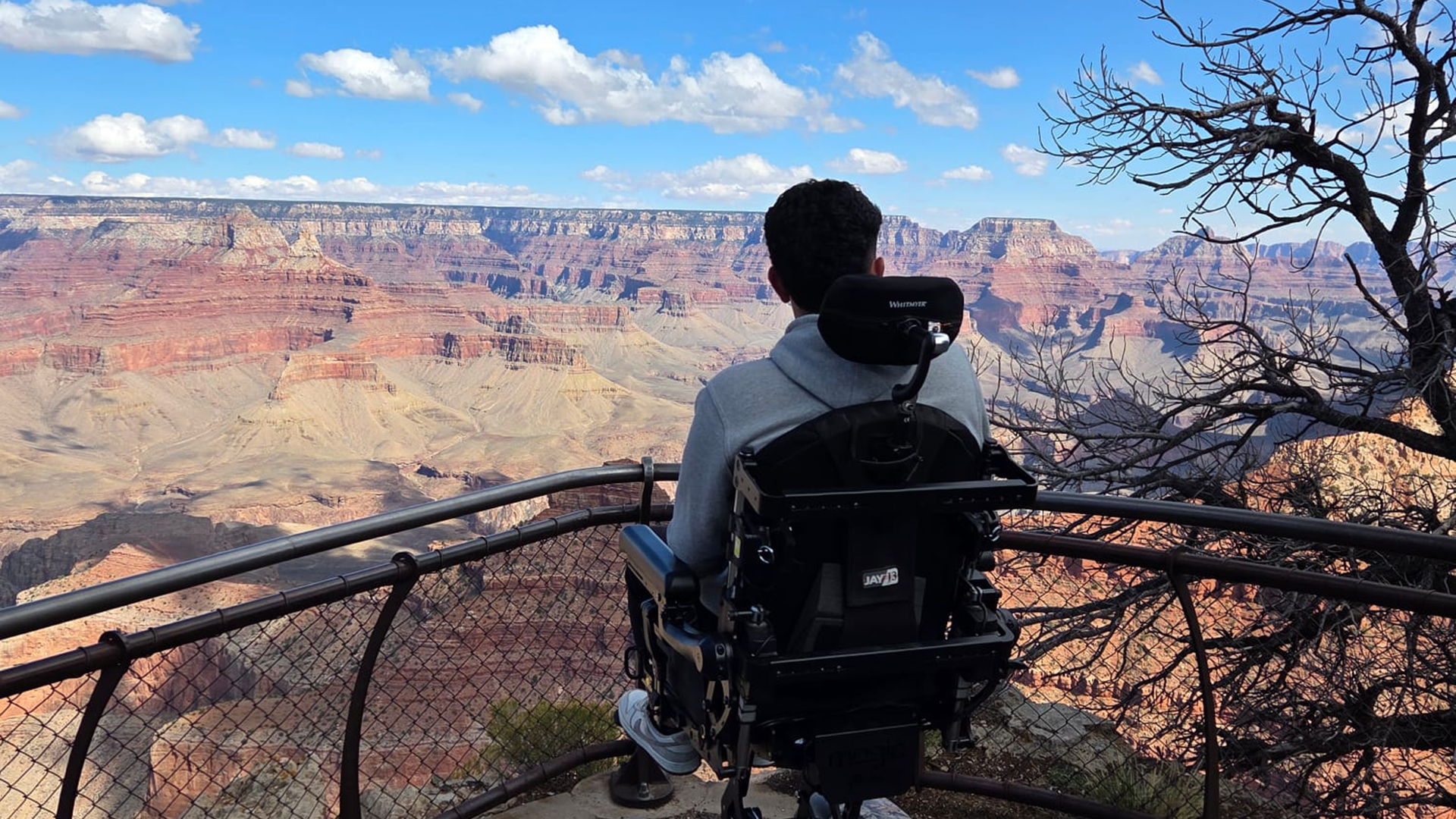
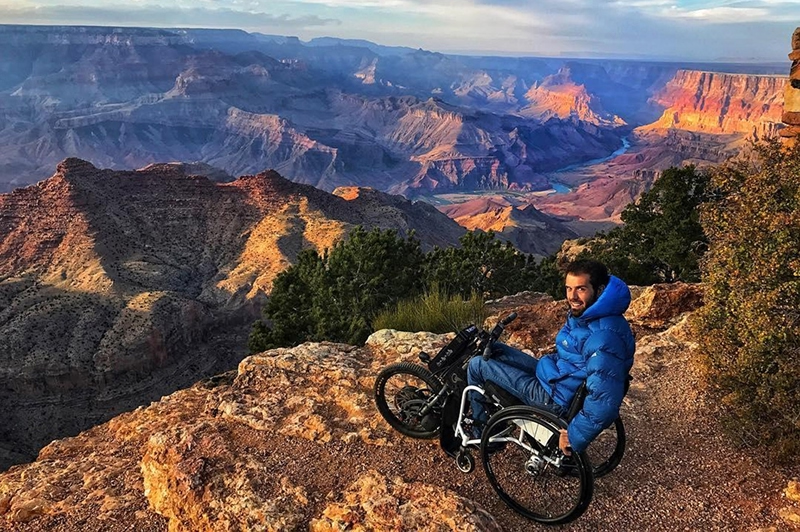
Accessible travelers to Grand Canyon National Park can enjoy one of the most dramatic natural landscapes on the planet and barrier-free activities. Along the South Rim, the paved Rim Trail connects most major viewpoints of the canyon with a gentle slope perfect for wheelchairs and other mobility devices. Most viewpoints are located near shuttle drop-offs or parking, making access even easier. And many ranger-led talks are wheelchair accessible and include American Sign Language (ASL) interpretation or assistive listening devices.
More Accessible Travel Tips
Some adaptive resources are only available during certain seasons, so planning aheadis essential — whether reserving equipment or scheduling a trip around an accessible event. For the most up-to-date information, check local calendars or contact Discover Flagstaff.
You can also contact individual businesses directly to see if they offer accessible services. Says Shoaff, program director of High Country Adaptive Sports: “If it doesn’t look like something you can do, reach out [to us], and we’ll see if we can make it happen.”
Header image credit: Matt Fahey (dbrpro.com).


Kevin Lane
Kevin Lane is a freelance writer with a background in sustainability and science communication. An avid hiker and rockhound, he finds inspiration in the natural world and loves sharing his passion for the outdoors through storytelling. His work has appeared in local and regional publications across the country.



.avif)