.png)
Having grown up in a family of avid hunters and anglers, Payson resident Linda Dightmon has spent decades paying forward her love for the outdoors. In addition to 25 years as a coordinator for the Arizona Wildlife Federation’s (AWF) Becoming an Outdoors Woman (BOW) program — which was inducted into the Arizona Outdoor Hall of Fame in 2021 — she served as a volunteer hunter education instructor for the Arizona Game and Fish Department and on the steering committee of the Hunting and Angling Heritage Workshop Group (HAHWG). In 2025, Linda was honored by AWF as Conservation Educator of the Year.
Here, Linda shares her insights on hunting and fishing in Mogollon Rim country, a stretchof northeastern Arizona known for its striking beauty and endless recreation.

What makes the Mogollon Rim a unique hunting and fishing destination?
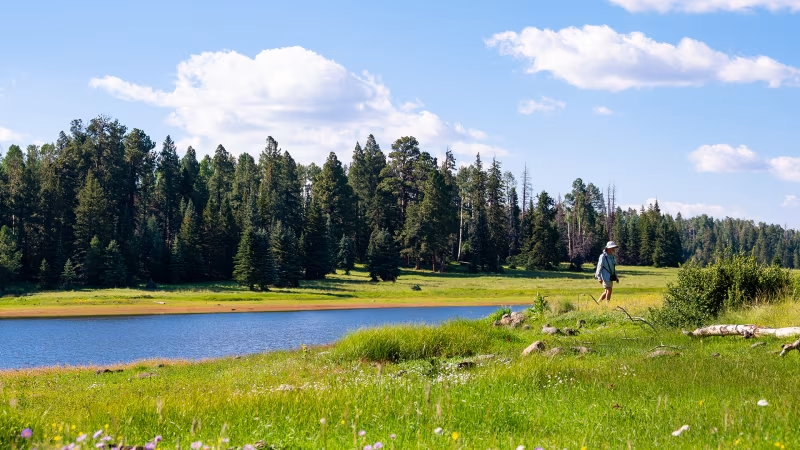
It’s the Mogollon Rim land formation itself. It’s 200 miles long from Flagstaff to New Mexico, and it’s about 2,000 feet above the land below it. That gives us a lot of diverse habitats — from high desert to Ponderosa pines — for different kinds of critters.
What does someone who has never hunted or fished in this region need to know?
It’s rugged, steep and unforgiving country, and you cannot underestimate it. Many places have limited cell service, so it’s important to be prepared, starting with wearing sturdy boots and carrying enough water.
When is the most ideal time to hunt and fish in this region?
Like most places in Arizona: spring and fall. My favorite is the entire month of October — I wish it were three weeks longer! During autumn, I’d encourage people to consider what we call a “cast and blast.” You can harvest tree squirrels and trout, with no special tags required, and also have a good chance of hearing bugling elk. Spring is also very good, but be prepared that the weather can beiffy.
What kind of game can hunters expect to find? And what fish species might anglers catch?
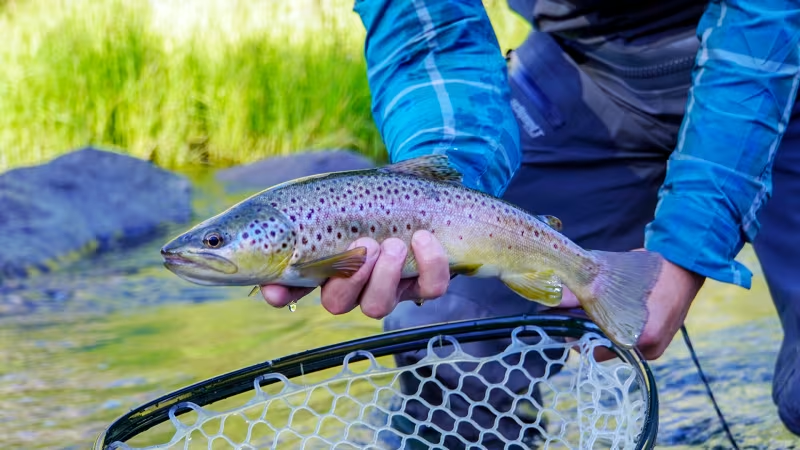
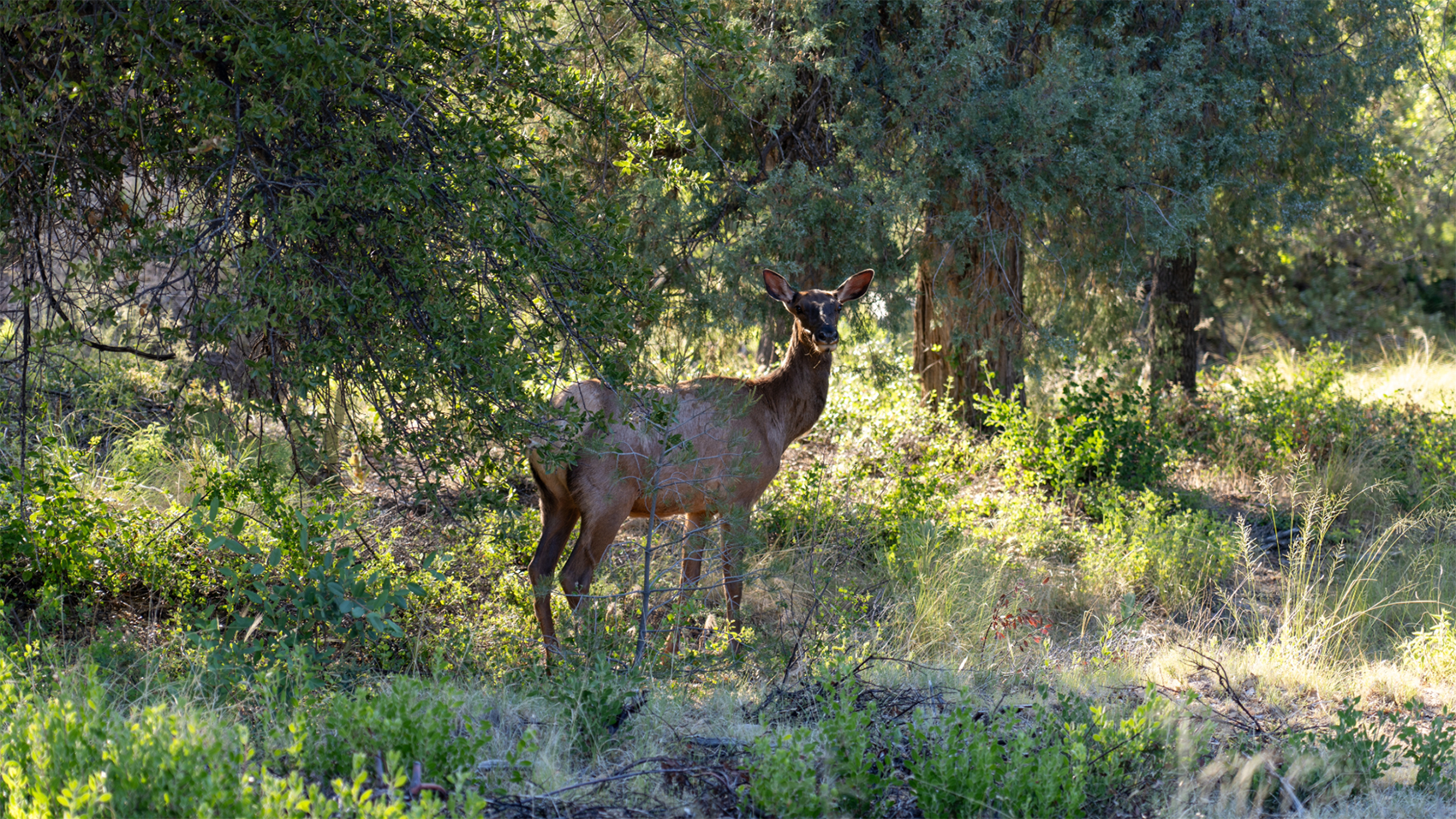
It’s a longlist: elk, mule deer, Coues deer (which we call whitetail), javelina, black bear, lion, turkey and even some pronghorns. I’d say we underutilize our small game like Abert's and Arizona gray squirrels, and rabbits and jackrabbits inthe lower country. The big game is great, but small game is a lot of fun and is tasty table fare. As far as trout, we have rainbow, brown and tiger, and Arizona Game and Fish Department also stocks native Gila trout. You’ll find some small mouth bass in a few of the Mogollon Rim lakes, too.
What are the hunting and fishing regulations in the region?
Spring regulations include bear, turkey, javelina and bison, and there is a separate booklet of regulations for elk and pronghorn. The main regulations come out in May with deer, youth javelina and fall turkey — that’s also where you’ll find the regs for small game, plus seasons and bag limits. For fishing, be aware that different fisheries may have their own special rules, whether it’s fly-only, lower bag limits or catch and release. All this info is available online.
What are the challenges that hunters and anglers face inthe Mogollon Rim area?
In additionto the rough terrain, I’d say the weather, which changes quickly in spring and summer. It can be storming on top of the Rim and beautiful below. So, the best thing is to prepare for diverse weather and dress in layers. It might be 100 degrees in the Valley, but it drops four degrees for every 1,000 feet in elevation.
.png)
What is your most memorable fishing experience in Rim country?
Last August, I was fishing in my float tube at Willow Springs Lake, and a big storm was chasing us off the water. I was coming up to the dock skunked — I hadn’t caught anything. All of a sudden, a big fish took my bait, and when that happens in a float tube, you get taken around in circles because you’re trying to keep the line tight and not let him come to you too quick. It’s pretty hysterical, and at this point, I’d gathered an audience. After about 10 minutes and two tries with the net, I finally landed it — a 19-inch rainbow trout — and got lots of cheers.
Any gear or equipment recommendations?
Wear sturdy boots and leave the flip-flops at home. While you might have GPS on your phone, my opinion is that it’s better to have a standalone GPS unit. A hiking stick is always helpful. Light tackle and line work best for trout, and you can still and a nice big, heavy fish.
If you decide to overnight, what are the best places to camp or stay in the area?
Upper Tonto Creek has a tent camping area that’s great for summertime fishing and camping. And then pretty much anywhere in the forest is dispersed camping — but don’t camp too close to the edge of the Rim if you’re up top. If you’re not a camper, Kohl’s Ranch and Christopher Creek Lodge are both unique andlocally owned.
Header image: Mogollon Rim Interpretive Trail, An Pham.


Jake Poinier
Jake Poinier is a veteran freelance writer, editor, and author whose work has appeared in USAToday, Blue Water Sailing, and Golf Illustrated, among numerous other publications. When he's not at his desk writing for corporate clients and editing books, he can probably be found hiking or fishing along the Mogollon Rim, skiing in the White Mountains, or sailing just about anywhere.