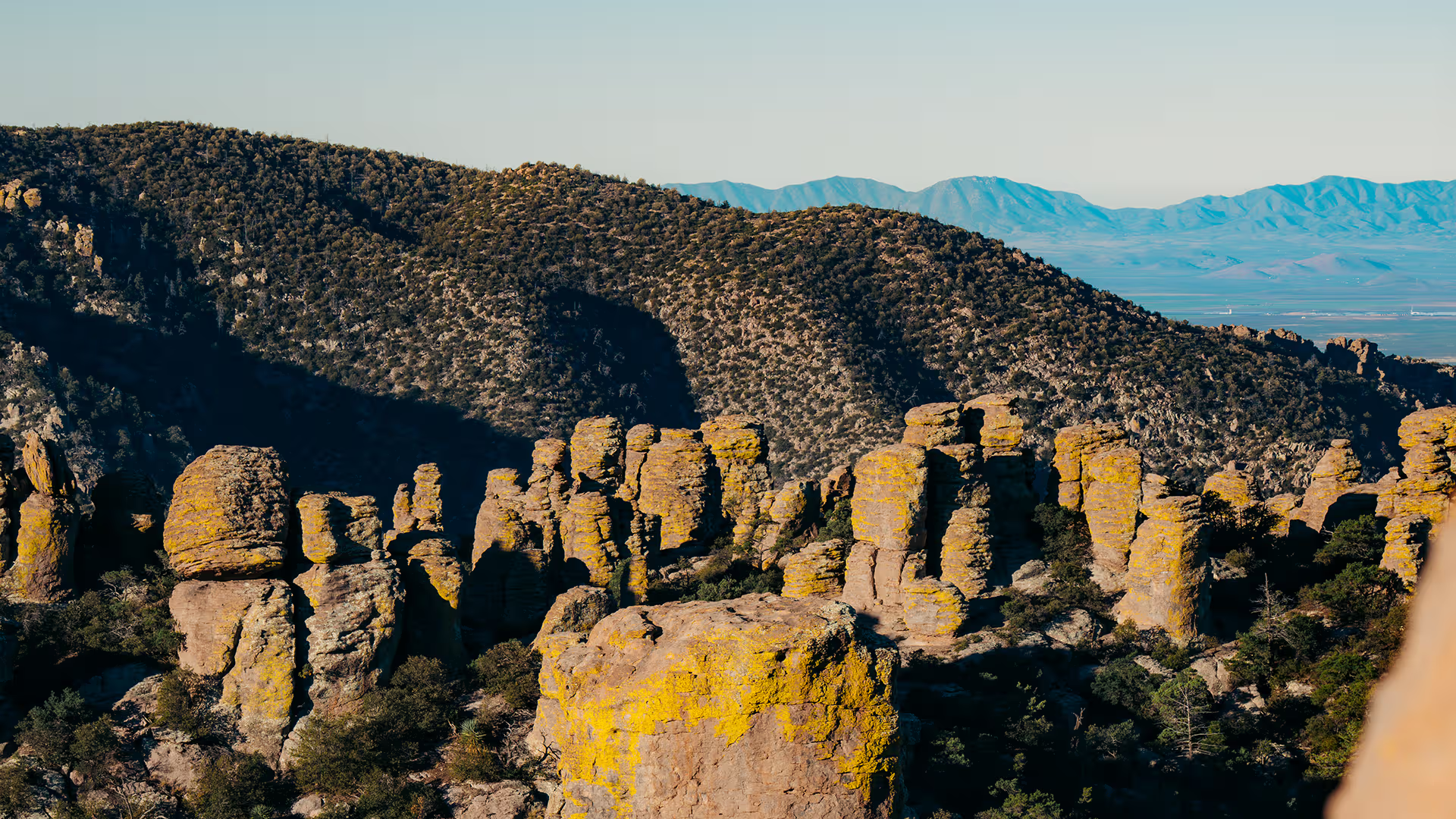
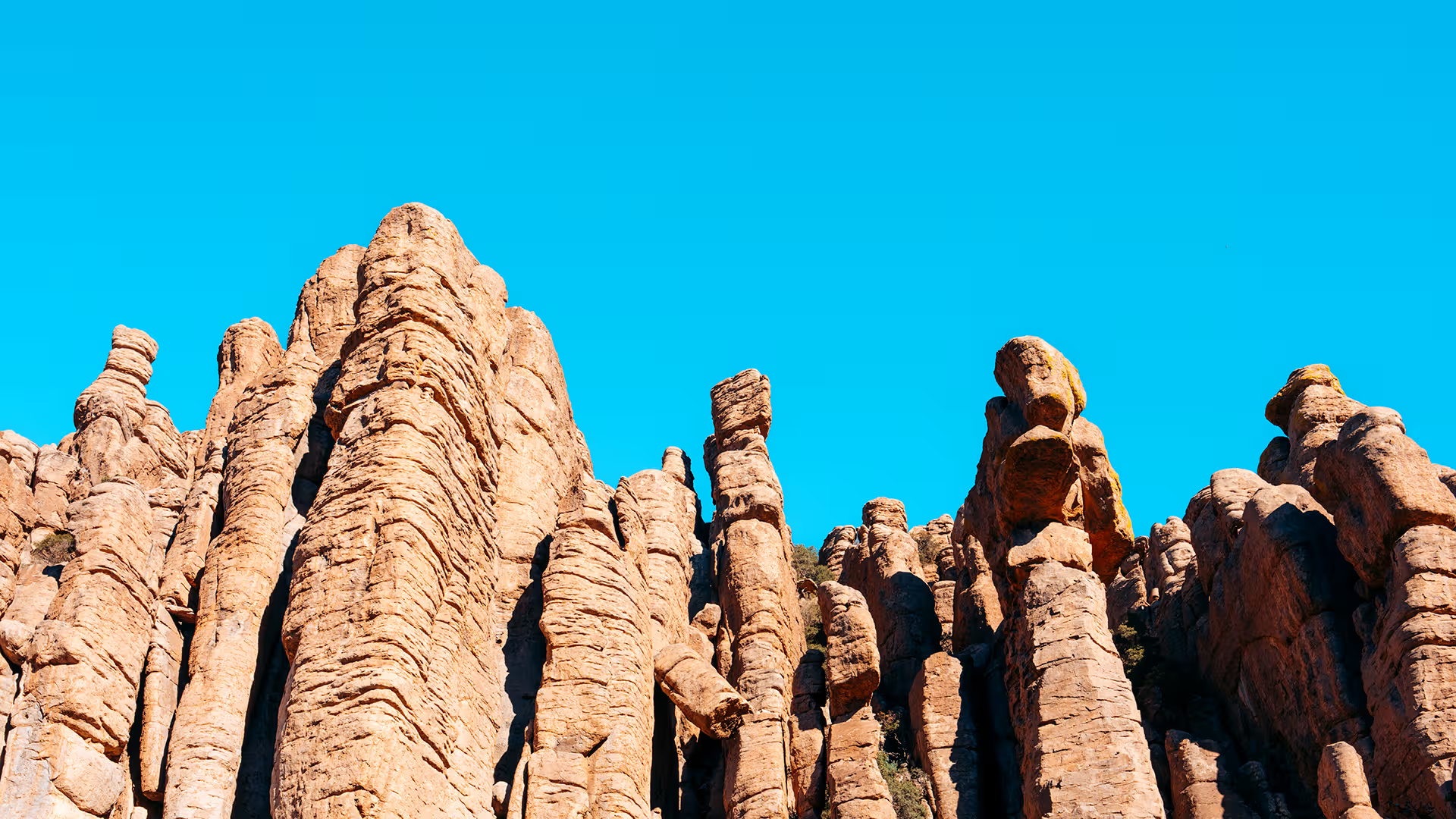
Towering rock spires called rhyolite pinnacles — some crowned with massive boulders — erupt throughout the 12,000 acres that comprise Chiricahua National Park in southeastern Arizona. Elevated from monument status to a national park in October 2026, Chiricahua is Arizona’s fourth national park, and it offers more than just geological wonder. The area has ties to the Chiricahua Apache, Buffalo Soldiers and early ranchers, and was designated by the National Audubon Society as one of the nation’s “Important Bird Areas.”
Getting to Chiricahua National Park
From Phoenix, take I-10 East about 100 miles to Tucson. Continue from Tucson roughly 80 miles on I-10 to AZ-186. Turn right and drive 30 miles to AZ-181 East. Turn left. Within three miles, enter the park.
RVs and trailers longer than 29 feet are not permitted past Faraway Ranch Parking since the road through the park twists and turns.The national park recommends leaving larger vehicles in Willcox or Sunizona.
Drivers of electric vehicles (EV) should note that thepark does not have EV charging stations. For a charge, drive 35 miles to Willcox for Tesla, J1772, CCS and NACS interfaces. Sierra Vista, roughly 85 miles from the park, has the most charging options (and stations) in the area.
The Basics
When to go
Winter is the most popular time to visit Chiricahua National Park — this also means winter is the season for the most crowds. Katherine Hostetler, acting chief of interpretation and visitor services forthe park, recommends visiting in late spring or summer since there will be fewer people. Plus, the days are longer, so more time for exploration. Plan a trip in the spring to see wildflowers and autumn to see fall colors.
What it costs
Chiricahua National Park does not charge an entrance fee or parking fee. However, while it’s free to visit, the park service charges campers $25 to $50 per night, depending on the site selected, to stay at Bonita Canyon Campground.
What you’ll need
Services in the park are limited. You’ll need to bring your own food and beverages — be sure to stay hydrated by drinking plenty of water — and make sure you have enough gas (or charge) to get to nearby communities on your return. Bring a paper map since Wi-Fi service is limited.
What to pack
Plan to take lots of photographs of the park’s unique rock formations and its wildlife. If using your phone’s camera, pack a portable power bank to keep it charged. Binoculars are helpful for birdwatching and wildlife viewing, and a guidebook to identify what you see is a good idea, too. Additionally, pack:
- Clothing in lightweight layers, such as jackets, long-sleeve shirts, zip-up hoodies
- Closed-toe,sturdy, comfortable shoes
- Sunscreen
- Sunglasses and a wide-brimmed hat
A Day at Chiricahua National Park
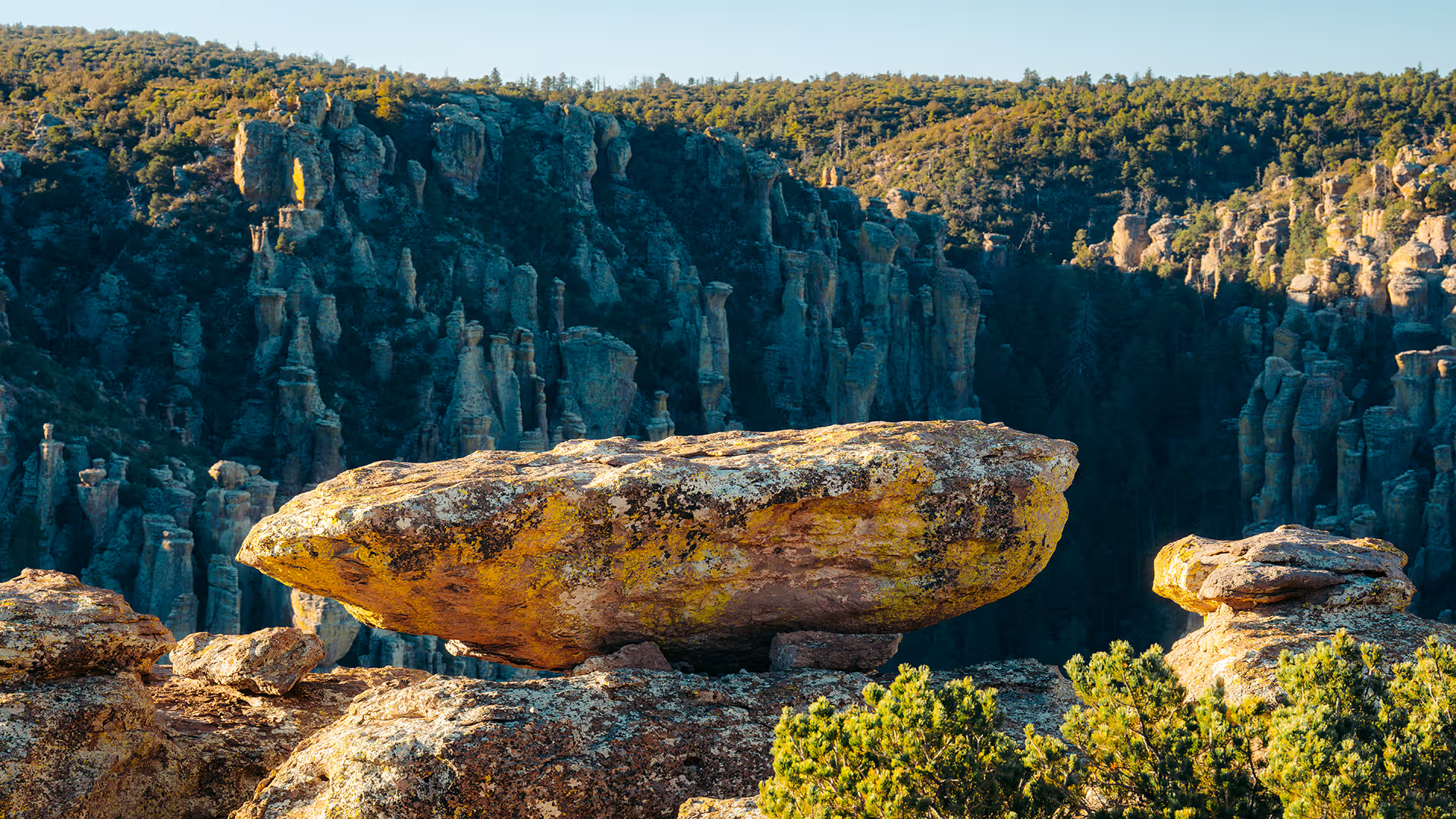
Most visitors explore the park by car, foot or a combination of both. If driving, allow at least 60 to 90 minutes to wind along Bonita Canyon Drive to Massai Point for 360-degree views. Since the park is a “sky island” — a mountain range with a distinct ecological zone — desert flows into grasslands, then forest, as you drive. Watch for coati mundis and other wildlife along the way.
Hostetler encourages visitors to hike if they can. The park offers 13 trails, ranging from the paved Bonita Creek Loop, which takes less than 30 minutes to complete, to The Big Loop, a 9.5-mile trail that can take a full day. (Take advantage of the morning shuttle from Faraway Ranch for day hikes.) Routes through Echo Canyon are always a favorite, Hostetler says.
While in the park, especially on the Bonita Creek and Silver Spur Meadow trails, watch for some of the more than 200 bird speciesthat have been spotted in Chiricahua Mountains. Overnight stays at Bonita Creek Campground reward with vivid sunrises and sunsets as well dark skies for stargazing.
Where to Stay
Willcox, the closest to city to Chiricahua National Park, has both small motels and chain hotels. Further out, Bisbee and Tombstone favor bed and breakfasts and boutique properties. If you’re willing to stay an hour and a half outside the park, Sierra Vista offers more national hotel brands, including two Marriott properties.
- Dream Catcher Inn: This bed and breakfast sits on 13.6 acres near the park and features five individually themed rooms with private entrances. In addition to complimentary breakfast, guests can order packed lunches and chef-prepared, three-course dinners.
- Tombstone Monument Ranch & Cattle Company: Just outside Tombstone, the guest accommodations at this working cattle ranch resemble an Old West town. Enjoy a dude ranch experience with activities like horseback riding or simply stay overnight.
Leave No Trace
When visiting Chiricahua National Park, follow the AppreciateAZ guidelines,which help keep our public lands free from trash and debris and protect it for generations to come.


Teresa Bitler
Teresa Bitler is an award-winning travel writer whose work has appeared in National Geographic Traveler, American Way, Wine Enthusiast, and AAA publications. She is the author of two guidebooks and a contributor to Fodors Arizona & The Grand Canyon.