Leading bird expert Richard Cachor Taylor authored "Birding in Arizona," a guidebook packed with information on where to go to see common and rare species in the Grand Canyon State, paired with photographs, bird descriptions, area maps and more.

For Taylor’s statewide birding tips, click on the regional links below:
- Greater Phoenix & Scottsdale
- Tucson & Southern Arizona
- Lake Havasu & Western Arizona
- White Mountains & Eastern Arizona
- Sedona & Verde Valley
- Grand Canyon & Northern Wonders
To discover how Taylor got started and why he considers Arizona one of the top birding destinations in the world, read on.
A Life-Altering Moment
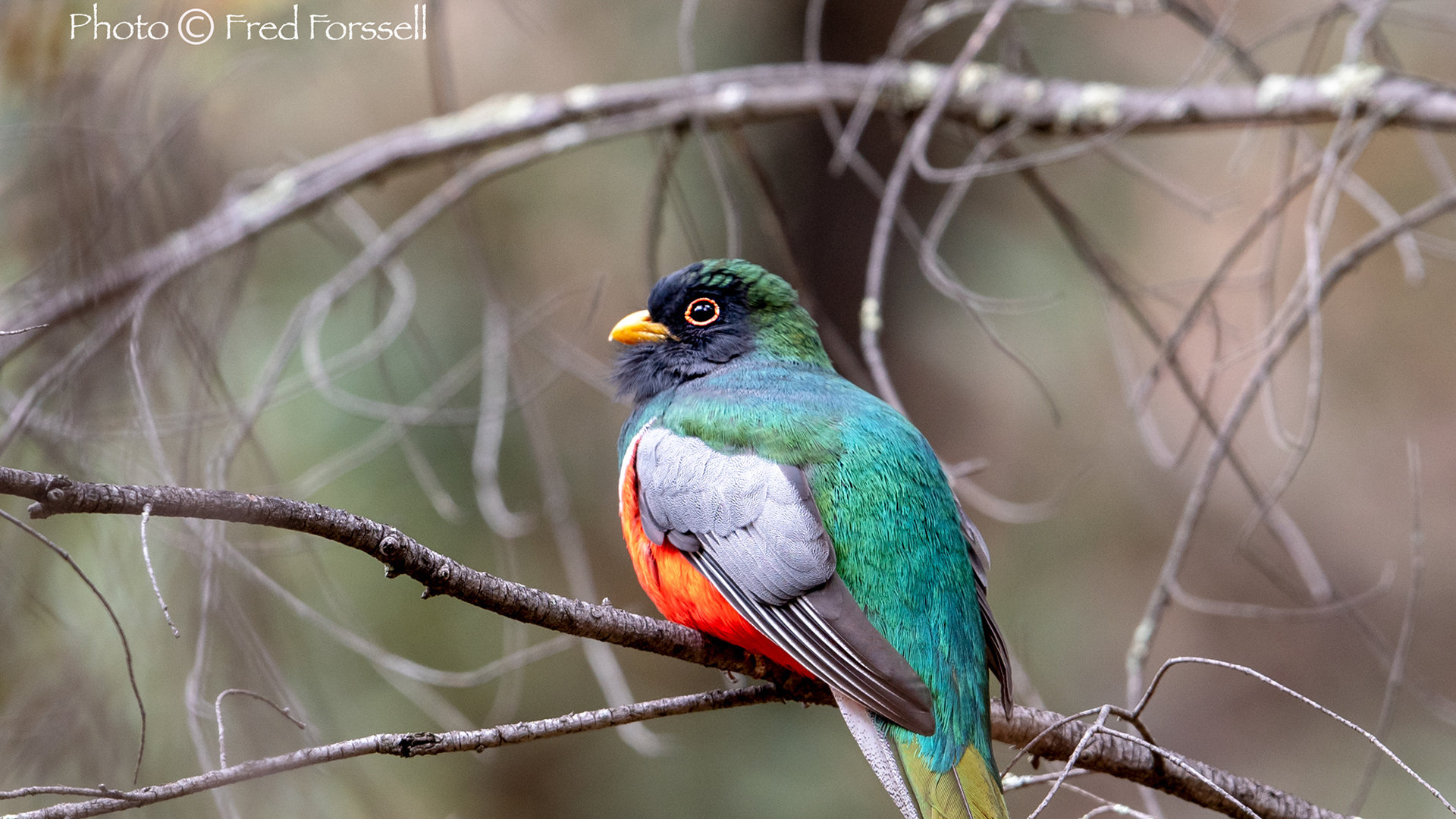
Ever since he was young, Rick Taylor has been observing birds near his Arizona home. But it was when he first saw an Elegant Trogon, a colorful tropical species that migrates north from Central and South America, that something changed.
“I was in graduate school and a naturalist told me there was a bird I really should see,” Taylor recalls. “We hiked an area near Portal, Arizona, and saw a male bird with a crimson red breast, an iridescent green back and shimmering azure highlights on the green. It had a black and white undertail that was barred with smoke grey rings, and an orange eye ring.
“It was my first observation of the Elegant Trogon. From that point, I was hooked.” The encounter set Taylor on a decades-long journey of international travel and his own evolution into one of the most respected bird experts in Arizona—and the world’s leading authority on the Elegant Trogon.
A Birder Takes Flight
.png)
As a teenager, Taylor, who currently lives in the Chiricahua Mountains of Southern Arizona, began making lists, jotting down all the birds he was seeing. He became serious about the hobby as he got older, especially after joining the Forest Service as a contact specialist.
“I was being asked to lead trips into Mexico and Costa Rica, and eventually into Guatemala, Belize and throughout Central America, to see the birds because they are so diversified and gorgeous,” Taylor remembers.
“A large group of my clientele in the Chiricahua Mountains were birdwatchers,” he says. “Economically, they were drivers. It was a large producer of out-of-state revenue; I realized birders were flocking here. In 1980, Taylor launched Borderland Tours, a guiding company geared to birders.
“The number one bird people wanted to see is the Elegant Trogon, certainly in the Chiricahuas,” Taylor says. “So I began to study it, do research, talk to professors. I became as best I could an expert on that bird.”
Arizona, Birding Mecca

Despite his world travels, Arizona remains one of Taylor’s favorite places for birding. His 2022 book, "Birds of Arizona" (published by R. W. Moore), reflects his deep love of the state, its environment and especially its birding spots.
The pocket guide contains details on more than 500 species found in Arizona, and is jam-packed with range maps, elevation requirements, habitats and more. Taylor explains that the diversity of habitats that Arizona offers is the main reason it attracts such a wide range of avian species.
“Every corner of Arizona is unique. The Colorado River is like an extension of the Sea of Cortez. The White Mountains are similar to the Rockies. And the San Francisco peaks climb out well above tree line.”
What about Arizona’s famous deserts? “Every desert is different in its personality,” Taylor continues. “The Chihuahuan Desert is where we get Chihuahuan Ravens. The Sonoran Desert is where a species like a Gilded Flicker finds their metropolis. The Sonoran also has Sage Thrashers and Sagebrush Sparrows.”
Another reason birders come to Arizona is the proliferation of hummingbirds, many of them rare species. “Southeastern Arizona is the hummingbird capital of the U.S. You can see 14 different species of hummingbird here.”
A Book for Birders

So, how does Taylor hope "Birds of Arizona" will guide Arizona birders? “I want it to be accessible to anyone trying to figure out ‘what bird is that?’ But also, to expand the horizons of advanced beginners or intermediate birders.
“Depending on how advanced you get as a birder, the topic of the birds of Arizona is so enormous. I have many national field guides and they just cannot show the same sort of detail as this book.”
For example, did you know that the ladder-backed woodpecker is a common resident of Arizona? Or that its voice consists of ‘well-spaced peach notes’ and its call a ‘series of run-on quick-quicks.’ It’s found at elevations between 100 feet and 6,800 feet and often pecks for insects. That’s the level of detail included for every one of the 500-plus species listed in the book.
Advice for Birders of All Skill Levels
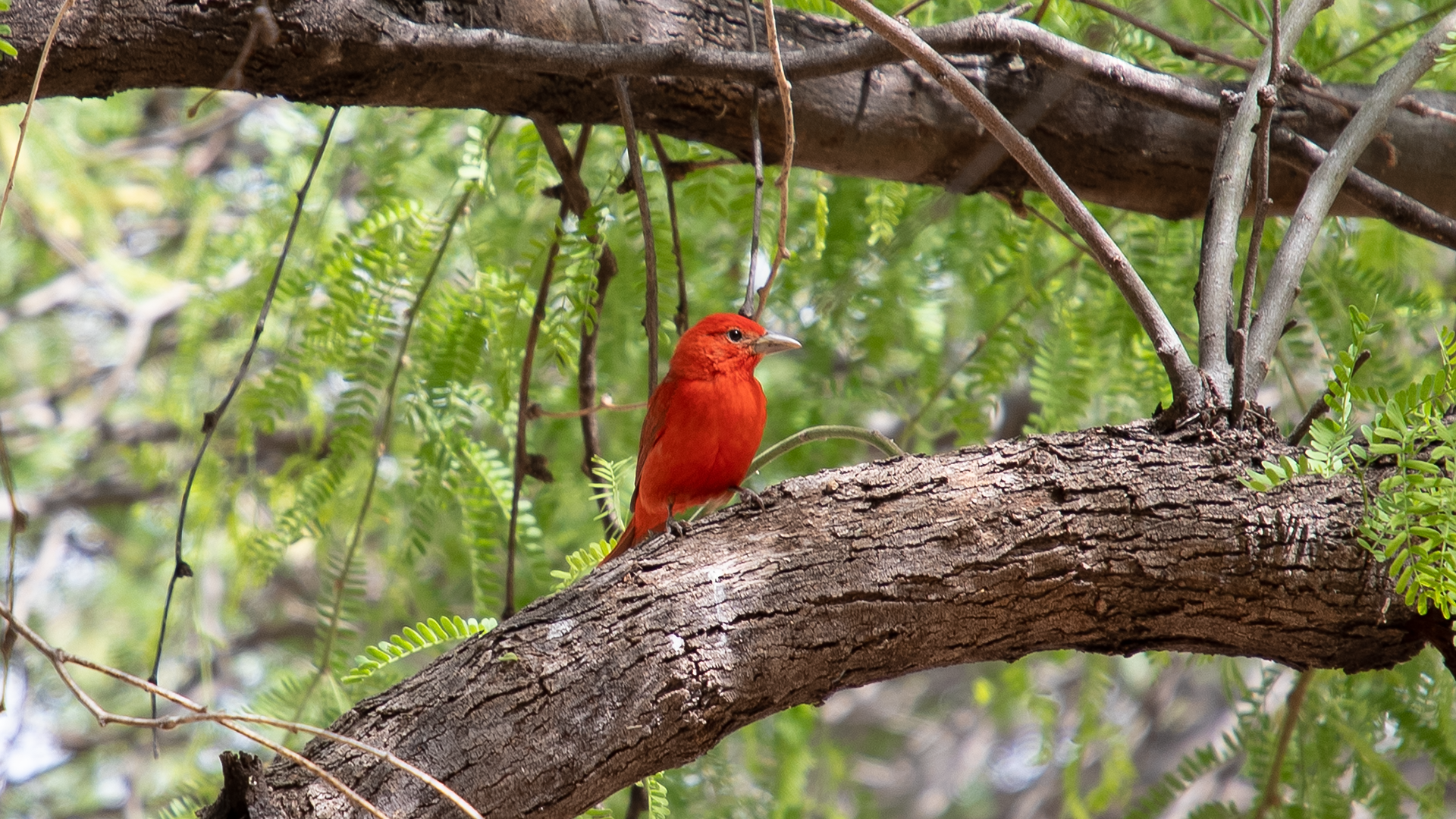
As for Taylor’s tips for a first-time birder, he says this: “The most important thing is to look at a bird’s face. Birds have very different bills adapted to different lifestyles. Some probe deep into sand, others search for micro-organisms in murky water. Yet others catch insects or eat acorns.
“The beak will tell you a lot about a bird. So will the facial pattern, whether it’s an eye ring, or a long eyebrow, a partial eyebrow or a spectacle. A lot of the identification comes down to subtle differences in facial patterns.”
Any tips for advanced birders? “Advanced birders are probably more interested in patterns than anything else. This book is a quick-read resource for the importance of each record. Many places in Arizona lack cell signal, so you are not going to be able to use an app. But this bird guidebook is small and lightweight and can be easily carried with you into the field.”
Header image credit: @cdkeppel on Instagram.


Iain Lundy
Iain Lundy spent 40 years as a newspaper and magazine journalist in his native Scotland. Now relocated to Arizona, he works as a content writer, editor and genealogist. He enjoys the great outdoors, family history and, like a true Scot, good beer and a fine malt whiskey. Read more of his bio and work at lundyink.com.


800.png)